.png)
Creating a Comprehensive Risk Management Plan: A Step-by-Step Guide

Updated: Mar 18
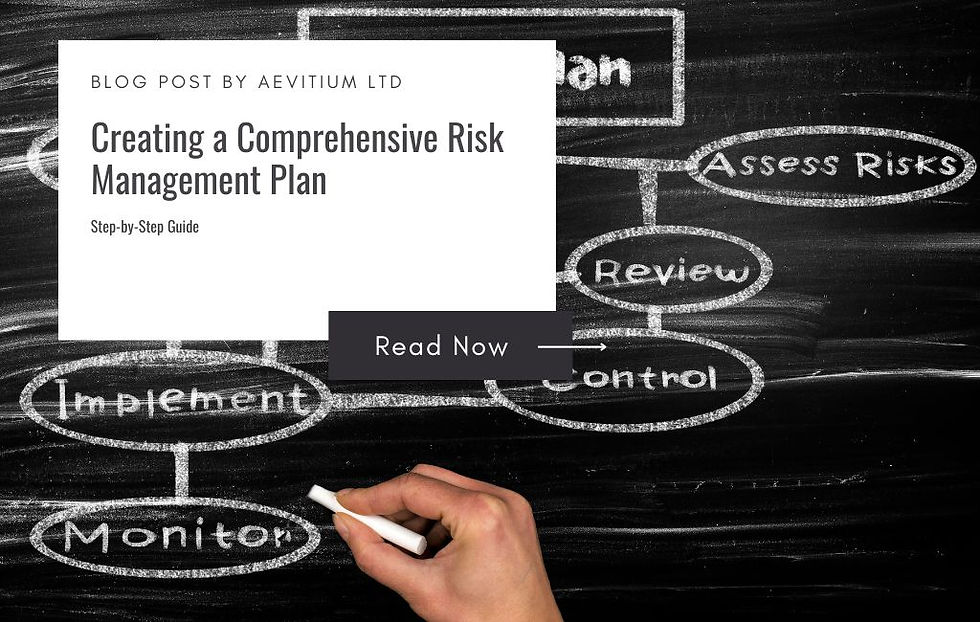
Introduction: Why Every Business Needs a Risk Management Plan
Every organisation faces risks that can disrupt operations, damage reputation, or weaken financial performance. These risks range from market volatility and regulatory change to cyber attacks, supply chain disruption, and human error.
Yet too often, risk planning remains fragmented. In a recent poll, nearly half of practitioners (49%) said their biggest challenge was unclear first-line ownership, while 29% admitted their RCSAs don’t drive real decisions. Without a clear plan, even a small issue can escalate into a major incident.
A Risk Management Plan, sometimes called a risk response plan, provides the structure to identify, assess, and mitigate risks before they impact the business. It ensures risks are prioritised, responsibilities are clear, and mitigation strategies are ready. Done well, a risk management plan not only protects against loss but also builds resilience and stakeholder confidence.
This guide explains how to create a comprehensive risk management plan for your organisation. It covers the key steps — from identifying and assessing risks, to developing response strategies, assigning risk ownership, and monitoring over time. By following this approach, leaders can move from reactive firefighting to proactive risk governance that supports growth and long-term success.
From Risk Planning to Decision Discipline
Most organisations do not struggle to produce risk management plans. Templates are widely available, frameworks are well established, and regulatory expectations are clearly defined.
The more meaningful challenge lies in how effectively these plans influence decision-making. In many organisations, risk identification, assessment, and mitigation are performed through structured processes, while strategic and operational decisions follow separate pathways shaped by commercial priorities, delivery timelines, or local judgement.
This separation leads to a familiar outcome. Risks are documented and reported, yet they are not consistently integrated into the decisions that create or amplify exposure.
A risk management plan becomes significantly more valuable when it is positioned as a decision-support mechanism rather than a reporting artefact. This requires linking risks to strategic and operational objectives, embedding risk insight into decision forums, and ensuring that ownership of risk aligns with the authority to influence outcomes.
The steps outlined in this guide provide a solid structural foundation. Their impact increases when they are integrated into how decisions are framed, challenged, and monitored across the organisation.
What is a Risk Management Plan?
A risk management plan sets out how an organisation identifies, assesses, and responds to risks that could affect the achievement of its objectives, within defined risk appetite.
Its purpose is to ensure that risks are understood, prioritised, and addressed in a way that supports effective decision-making and maintains exposure within acceptable boundaries.
Key Benefits of a Risk Management Plan
A risk management plan creates value when it informs how decisions are made and how resources are allocated across the organisation.
At an operational level, it supports the early identification of risks, enabling teams to anticipate potential disruption and respond in a timely manner. This improves coordination across functions and reduces the likelihood of isolated issues escalating into broader incidents.
At a management level, it provides a structured view of exposure, helping prioritise actions and allocate resources where they have the greatest impact. This strengthens the organisation’s ability to balance risk and return in line with its objectives.
At a governance level, it enhances visibility for senior leadership and the board, supporting more informed oversight and clearer accountability for risk-taking decisions.
These outcomes are reflected in a number of practical benefits:
Proactive Problem Solving: Allows organisations to anticipate potential risks and prepare solutions in advance.
Resource Allocation: Helps allocate resources effectively to areas that need the most attention.
Regulatory Compliance: Ensures that the company adheres to industry regulations and standards.
Stakeholder Confidence: Builds trust with stakeholders by showing a proactive approach to risk.
Where Risk Management Plans Fall Short
In practice, many risk management plans fail to influence outcomes due to structural gaps:
Risks are documented, yet not consistently integrated into decision-making
Ownership is defined, while authority to act remains unclear
Monitoring focuses on reporting rather than early signals of change
Recognising these patterns is essential to ensuring that a risk management plan supports execution rather than remaining a static artefact.
What are the 5 steps to a risk management plan?
Step 1: Identifying Risks
The first step in creating a risk management plan is identifying potential risks. These can come from various sources such as internal processes, project risks, external events, market changes, or technological advancements.
Risks should be identified in relation to the organisation’s strategic and operational objectives, as these define the context in which exposure becomes relevant.
Types of Risks to Consider:
Operational Risks: Issues related to internal processes, systems, and people.
Financial Risks: Market volatility, credit risks, or economic downturns.
Reputational Risks: Customer complaints, public relations crises, or social media backlash.
Cyber Risks: Data breaches, cyber-attacks, and software vulnerabilities.
Regulatory Risks: Changes in laws, compliance issues, or governmental actions.
Tools for Identifying Risks:
SWOT Analysis (Strengths, Weaknesses, Opportunities, Threats)
Risk Workshops: Engaging team members in brainstorming potential risks.
Checklists and Risk Registers: Keeping a record of all known risks in an industry.
Step 2: Risk Assessment and Prioritisation
Once risks are identified through risk analysis, the next step is to assess their potential impact and likelihood. Risk assessment allows organisations to prioritise which risks need immediate attention and which ones can be monitored over time.
Risk assessment becomes decision-relevant when it clarifies the trade-offs between available options.
Assessing Risks Based on:
Likelihood of Occurrence: How probable is the risk? Is it a rare event or a frequent occurrence?
Impact on Business: What would be the financial, operational, and reputational consequences if the risk materialises?
Risk Assessment Matrix:
A risk assessment matrix is a visual tool used to plot risks based on their likelihood and potential impact. Risks that are high in both likelihood and impact should be addressed first.
Step 3: Risk Response and Mitigation Strategies
After prioritising risks, including those identified through project risk management, the next step is to develop strategies for mitigating or responding to them. Mitigation strategies should inform how decisions are adjusted, not only how controls are implemented.
There are four main risk response strategies:
Avoidance: Eliminating the risk entirely by changing plans or operations.
Reduction: Minimising the impact or likelihood of the risk by taking preventive actions.
Transfer: Shifting the risk to a third party (e.g., through insurance or outsourcing).
Acceptance: Acknowledging the risk but deciding to proceed without action due to its low likelihood or impact.
Common Mitigation Techniques:
Business Continuity Plans (BCP): Preparing for potential disruptions in operations.
Insurance Policies: Transferring financial risks to an insurance provider.
Technological Safeguards: Implementing cybersecurity measures to protect data and systems.
Employee Training: Ensuring staff are aware of risks and how to handle them.
Step 4: Assigning a Risk Owner
An essential part of executing your plan is designating a risk owner—the person or team responsible for managing specific risks. Without a clear risk owner, there can be confusion over who is accountable for monitoring and mitigating a risk, which may result in delays in response.
Effective risk ownership requires alignment between accountability for the risk and authority over the decisions that influence it. Where this alignment is absent, escalation becomes reactive and mitigation is delayed.
How to Assign a Risk Owner
Identify the Relevant Risk Start by fully understanding the risk that needs management. Analyse its nature (operational, financial, strategic, etc.), the potential impact on your business, and the likelihood of occurrence. This will help determine which part of your organisation is best suited to handle it.
Choose the Department or Function Determine which department is most directly impacted by or responsible for the area of the risk. For example:
Financial Risks: Likely managed by the finance department or CFO.
Cybersecurity Risks: Best handled by the IT or security team.
Compliance Risks: Typically assigned to legal or compliance officers.
Assign the risk to the department with the appropriate expertise and proximity to the risk.
Select a Person with Authority The risk owner must have the authority to make decisions and implement mitigation strategies. Ideally, this person should:
Have sufficient influence over the affected areas.
Be knowledgeable in the field of the risk (e.g., a CFO for financial risks).
Be accountable for the outcomes related to the risk’s mitigation and management.
Define the Risk Owner’s Responsibilities Clearly outline the risk owner’s role to ensure smooth execution. Responsibilities should include:
Monitoring the Risk: Continuously assess the risk for changes in status or severity.
Mitigating the Risk: Oversee the implementation of mitigation strategies and preventive measures.
Reporting on the Risk: Regularly update key stakeholders on the risk status and actions taken.
Escalation: Ensure that significant risks are escalated appropriately when they exceed acceptable limits.
Enable Collaboration Across Departments Risks often span multiple functions or departments. Ensure that the risk owner collaborates effectively with other teams to manage cross-functional risks, gather necessary information, and execute mitigation strategies.
Provide Necessary Resources It’s vital to equip the risk owner with the resources required to manage the risk, including:
Adequate budget for mitigation efforts.
Access to key personnel and tools.
Support from leadership to make decisions and take action.
Review and Adjust Periodically Risk ownership may need to be re-evaluated over time. Changes in the organisational structure or the nature of the risk might require reassignment of responsibilities. Regular reviews during risk audits ensure that ownership remains appropriate and effective.
Step 5: Monitoring and Review
Risk management is not a one-time activity. It requires ongoing monitoring and regular review to ensure that new risks are identified and existing ones are adequately managed. Monitoring is most effective when it focuses on forward-looking indicators that inform decisions in real time.
Key Elements of Risk Monitoring:
Regular Audits: Conduct periodic reviews to assess the effectiveness of risk mitigation strategies.
Risk Indicators: Use key risk indicators (KRIs) to signal when a risk is escalating.
Reporting Systems: Maintain a transparent reporting process for risks, ensuring that stakeholders are aware of the current risk landscape.
Step 6: Documentation and Communication
A well-documented plan ensures that all stakeholders understand the risks, the response strategies, and their roles in managing these risks. Clear communication is essential to ensure everyone is aligned and prepared.
Components of Risk Management Documentation:
Risk Register: A detailed log of all identified risks, their assessments, and mitigation actions.
Action Plans: Clear guidelines on how to respond to specific risks.
Roles and Responsibilities: Defined roles for each team member involved in the risk management process.
Best Practices for an Effective Risk Management Plan
Involve All Stakeholders: Risk management is a team effort. Include all departments and key stakeholders in the process.
Stay Informed of Industry Trends: New risks can emerge from changes in technology, market trends, or regulations.
Update the Plan Regularly: As your business evolves, so should your plan. Review and update it regularly to reflect new risks and strategies.
Use Technology: Leverage risk management software and tools to automate and streamline the process.
How to Maintain the Risk Management Plan
Creating such plan is not a one-time activity. To remain effective, the plan must be continuously maintained, reviewed, and updated as new risks emerge or business conditions change. Failing to maintain the plan can result in outdated information and inadequate responses to evolving risks.
Conduct Regular Reviews
Schedule periodic reviews of the entire plan, at least annually or whenever significant changes occur in the organisation. Key areas to assess include:
Emerging Risks: New risks may arise due to changes in the market, technology, regulations, or internal processes.
Effectiveness of Mitigation Strategies: Evaluate whether existing risk mitigation strategies are working as intended or need adjustment.
Risk Assessment Adjustments: Reassess the likelihood and impact of each risk to ensure they reflect the current environment.
Update the Risk Register
The risk register—a record of all identified risks and their assessments—should be regularly updated with new information. This includes:
Adding any newly identified risks.
Updating the status of ongoing risks (e.g., changes in likelihood, impact, or mitigation actions).
Archiving risks that are no longer relevant or that have been fully mitigated.
Incorporate Lessons Learned
After any significant risk event (whether successfully managed or not), conduct a post-incident review to understand what worked and what didn’t. Integrate these lessons into the plan to enhance future risk management efforts. This may involve:
Adjusting response strategies.
Improving risk identification processes.
Strengthening communication protocols.
Stay Informed on Industry Trends
Risks often change as industries evolve. Stay informed about external factors, such as regulatory changes, market shifts, or advancements in technology, which can introduce new risks or alter the profile of existing ones. Regularly incorporating industry insights ensures that your risk management plan remains relevant and proactive.
Ensure Ongoing Stakeholder Engagement
A key aspect of maintaining the plan is ensuring all stakeholders remain actively engaged. Regular communication with executives, risk owners, and relevant departments helps keep the plan top-of-mind and reinforces accountability for managing risks.
Use Technology and Tools
Risk management software and tools can help automate the process of maintaining and updating your plan. These tools can:
Track and assess risks in real time.
Notify risk owners of updates or changes.
Provide centralised documentation for easier management and collaboration.
Perform Risk Audits Periodic risk audits can be beneficial for identifying any gaps or inefficiencies in the risk management process. An internal or external audit can uncover risks that may have been overlooked and ensure compliance with industry standards and regulations.
Train and Re-Educate Employees Risk management practices evolve over time, and so should the skills of the people involved. Regularly train employees, especially risk owners and key stakeholders, on the latest risk management strategies and updates to the plan. This ensures that everyone understands their role in managing risks effectively.
Why Maintenance is Critical
Maintaining the risk management plan ensures that the organisation is always prepared to respond to new threats, improves the ability to mitigate risks in a timely manner, and fosters a culture of proactive risk awareness. Failing to maintain the plan can leave the organisation vulnerable to emerging risks and result in inadequate responses to major incidents.
Leadership Checklist
Five Questions Leaders Should Ask About the Effectiveness of Their Risk Management Plan
How clearly does the risk management plan link risks to the organisation’s strategic and operational objectives? A plan should reflect the exposures that matter for delivering strategy, not only those that are easiest to document.
To what extent does the plan inform key decisions and trade-offs in practice? Risk information should shape how options are evaluated, rather than being reviewed after decisions are made.
Is ownership defined in the plan aligned with authority over the decisions that influence risk exposure? Effective plans ensure that those accountable for risks are able to act on them.
What forward-looking indicators are included in the plan to monitor changes in risk exposure? Monitoring should enable early response, rather than relying only on retrospective reporting.
How does the plan define escalation when risk exposure changes or exceeds acceptable levels? Escalation mechanisms should connect emerging risks to the forums capable of adjusting decisions in a timely manner.
Conclusion: From Risk Management Plan to Risk Leadership
A risk management plan provides structure for identifying and managing exposure. Its value increases when it becomes part of how the organisation makes decisions and allocates resources.
Organisations that operate effectively under uncertainty extend this structure into governance and execution. Risk information informs trade-offs, ownership aligns with decision authority, and monitoring focuses on emerging signals rather than retrospective reporting.
This progression reflects a shift from risk management as a process to risk management as a leadership capability, where risk is embedded into how strategy is delivered and performance is sustained over time.
About the Author: Julien Haye
Managing Director of Aevitium LTD and former Chief Risk Officer with over 26 years of experience in global financial services and non-profit organisations. Known for his pragmatic, people-first approach, Julien specialises in transforming risk and compliance into strategic enablers. He is the author of The Risk Within: Cultivating Psychological Safety for Strategic Decision-Making and hosts the RiskMasters podcast, where he shares insights from risk leaders and change makers.